Opponents say that no amount of ridership will cover the initial cost of creating the infrastructure, nor the continued cost of operations and maintenance. “No mass transit system in the country charges riders enough to offset the expenses of running trains—much less the cost of capital. Amtrak loses hundreds of millions a year,” says author Steve Chapman
Showing posts with label Op-Ed. Show all posts
Friday, June 14, 2013
OpEd | National | High Speed Rail: How Much More Convincing Do We Need?
Many of my classmates have already talked about the need for
investment in a national High Speed Rail (HSR)
system. It is a much-discussed topic in urban planning and transportation classrooms.
HSR even has a cheerleader at the very top level, in US Department of Transportation Secretary, Ray
LaHood. "This is what the American people want. If you build it, they
will come," LaHood
declared (Chapman, 2011) ." So what will
it take to convince our legislators that the time to invest in HSR projects is
long overdue?
Opponents say that no amount of ridership will cover the initial cost of creating the infrastructure, nor the continued cost of operations and maintenance. “No mass transit system in the country charges riders enough to offset the expenses of running trains—much less the cost of capital. Amtrak loses hundreds of millions a year,” says author Steve Chapman (Chapman, 2011) . It’s true, trains
are expensive business. They fail to acknowledge, however, the fact that every
other mode of transportation in this country enjoys subsidies of one kind or
another. Though President Obama did pledge to spend $13 billion in federal
stimulus funds over five years to seed America’s first HSR projects, the
federal government hasn’t spent that little on highways in one year since 1958 (Selcraig, 2010) . Auto subsidies are simply
a prevailing fact of our culture, with federally-funded road maintenance as
well as mandated
parking spaces taking up precious urban real estate. And we all remember when
the entire national
auto industry had to be bailed out on the public’s dime. Locally, much-need
improvements in bike infrastructure was able to be funded by pairing the work
with storm water management
projects. Meanwhile,
the government has provided $4.64 billion in taxpayer funds to the airline
industry for cash grants and $1.65 billion in loan guarantees (Surjaputra, 2008) . Yet none of these
modes of transport can equal the benefits that HSR can bring.
Opponents say that no amount of ridership will cover the initial cost of creating the infrastructure, nor the continued cost of operations and maintenance. “No mass transit system in the country charges riders enough to offset the expenses of running trains—much less the cost of capital. Amtrak loses hundreds of millions a year,” says author Steve Chapman
Monday, June 10, 2013
Op Ed: Parking Policy in India
It has been four years since I moved to the US, but I am
still amazed by the amount of parking spaces available everywhere. This is a
far cry from the parking situation in India, where every trip made by car has
to account for an additional hour or two spent in traffic jams and looking for
a parking spot. Indian cities are experiencing an exponential increase in
traffic demand and the increased spending power is adding to more cars on the
road. Currently, India is the eleventh largest passenger car market having
recorded domestic sales of over 1.9 million cars in the country in the year
2009-2010(1)!
Parking policies in India are struggling to keep up with the growing demand. This
op-ed will examine the problems and focus on some possible solutions to India’s
parking problems from around the world.
![]() |
|
|
Op-Ed: Active People, Active Transportation
Portland Metro refers to the phrase
“active transportation” as sustainable, multimodal transportation solutions
that connect people to where they need to go (ODOT). At a local level,
infrastructure is incorporated in city design in order to allow people to
access what they need easily. Pedestrian focused design encourages people to
get out of their cars and be active by walking, biking, and taking public
transportation. It increases physical activity, decreases air pollution and gets people moving in and around their communities.
Op-Ed: Intelligent Transportation Systems Across the U.S.
Technology is continuously changing
and improving making life easier each day. Cars are becoming more fuel
efficient, mileage is increasing and they are getting smaller and even quieter.
Vehicle cosmetics have been a technological focus but now the next step is for
vehicles to get smarter; intelligent transportation should be adopted nationwide.
Intelligent transportation systems (ITS) are a form of technology that works to
monitor and manage traffic flow, especially in urban areas (USDOT 2007). It
would create many benefits from reduction in traffic accidents, time delay and congestion,
safer construction zones, and provide accurate and reliable information. ITS can
be helpful when there is limited resources to pay for people to do the same
work.
State Op-Ed: HOT lanes
What’s the problem?
In the transportation industry we are dealing we pretty much
every issue possible: congestion, air pollution, transportation financing, safety,
etc. We need to be creative in our solutions and there is no "correct" and perfect answer that will
satisfy every person. The state level policy I propose is a simple one that is not perfect but has the potential to improve many transportation issues when used
in the appropriate manner.
Possible Solution
We all know about High Occupancy Vehicle lanes, especially the
solo I-5 NB HOV lane that some hate
and some love.
My proposal is to implement policy to consider High Occupancy Toll lanes (HOT) as
a means to reduce congestion. I don't propose this as a policy to be considered just in Oregon but in any state. Congestion is a pressing transportation issue
which I describe in another op-ed
blog post.
HOT lanes are HOV lanes that allow single-occupant vehicles
to use it if they pay a fee. Busses and carpoolers can still ride in it for
free but if you’re alone then you pay a fee. HOV lanes are discouraged because they don't use all of the capacity that they offer...so why not sell that extra capacity HOT lanes have the ability to improve
transportation in many ways. They can reduce congestion, increase transit
ridership, lessen travel times and promote carpooling which can reduce air
pollution. When peak hour pricing is implemented it can also decrease the
amount of drivers during peak hours. Agencies can also promote electric
vehicle usage by allowing them to travel in the lanes for free.
Congress has made it possible to implement this new(er)
strategy to reduce congestion. MAP-21
gives states flexibility, when it comes to tolling, but exempts them from
converting an existing lane into a HOT lane. States will need to build new
lanes or convert HOV lanes in order to create HOT lanes.
In San Diego, a HOV lane was converted to a HOT lane in 1996
and has proved to be successful, especially financially. The implementation
cost was $1.85 million and the lane creates about $1 million
in revenues each year. The toll rates for this lane range from $0.50 to
$4.00 based on how much traffic is on the road. For awhile, San Diego also offered a monthly
pass instead of per trip costs.
The United
States Government Accountability Office did a study on price-managed
lanes and found that these lanes generally reduce congestion even though they found
some potential issues of concern, such as equity. Below is a map of the lanes that they studied:
| http://www.theatlanticcities.com/commute/2012/02/lukewarm-report-card-high-occupancy-toll-lanes/1120/ |
How can this be
implemented?
Even though the
federal government has given the states to go-ahead, some states may need to
implement new
legislation in order for HOT lanes to be possible. They may need to pass
legislation allowing for the conversion of an HOV lane to a HOT lane, to allow charging
fees on state highway or to permit enforcement by technology or electronic toll collection (ETC).
Political issues may
be the hardest obstacles to overcome. It is difficult for officials to persuade
drivers to pay for something that they already get for free. Value pricing can
help mitigate this issue by basing the price on maintaining a certain level of
service.
Potential issues
One critique of HOT lanes is that they are not equitable for low
income drivers. A possible mitigation for this critique is exemplified in
California’s option of FAIR
lanes. Essentially, drivers that use the normal lanes get credits and once
they get enough credits they can use the HOT lane for free. Drivers can also
choose to carpool or take transit. Also, ideally, if the HOT lane is reducing
congestion then the normal lanes should be going faster anyway so there is
still some time travel savings.
HOT lanes are not the answer to everything but they can be
the answer in some instances. Transportation officials need to be wise and do
the proper research and studies to determine if a HOT lane would be effective
in a certain location. There is a lot of flexibility with HOT lanes when it
comes to pricing and means to operate the lanes. HOT lanes have proved to be
effective so when used appropriately, they can be a great tool in the transportation
toolbox.
Active Transportation and The War On Obesity
Fatness – being overweight/obese is in most cases a symptom,
not a negative health outcome in itself. It is defined by the ratio of your
height to your weight and doesn’t take into account body composition, i.e.
whether this height and weight ratio comes from a body builder, someone with
excess fat, a pregnant woman, or someone with excess fat who had a leg
amputated and consequently has the “right” height to weight ratio. It’s too
blunt of an instrument to take into account whether someone’s bone structure
and musculature resembles a refrigerator or a giraffe. It doesn’t consider how
much exercise someone is getting, whether their calories are coming from
produce or deep-fried Mars bars, genetics, stress, exposure to environmental
contaminants… essentially, it is just about the bluntest means of talking about
health that the field of health has. We only hear about it so prevalently for
two reasons: 1) it gets used frequently in studies because it is quick, easy,
painless, and cheap to measure someone’s height and weight. Especially compared
to drawing blood or performing a cardiovascular stress test. 2) it’s in the news all the time, not because
it is terribly relevant, but because a three-letter abbreviation (BMI) is more accessible
to the general population than medical terminology like “adipose tissue” and “lipid
profile”, and articles about fat get clicked on. That’s why you see ads like
Because it works. People click on that stuff like crazy. And
what’s on the cover of supermarket tabloids?
But cardiovascular disease isn’t caused soley by a few extra
inches on your waist. It’s a subtle distinction between correlation and causation:
for most of us, poor diet and exercise habits (A) cause fat cells to grow (B) and a long list of
health problems (C). But this is a case of A causes B, and A causes C. B did
not cause C, except in the case of mechanical issues (sleep apnea) and hormone-mediated
diseases like diabetes and some cancers. People who won the genetic lottery and
can eat junk food and watch tv all day without gaining weight are still
increasing their risk of dying, and someone who is overweight but eats well and
exercises might live to see 97. The greatest increase in health from exercise
is reaped by people who are just transitioning from a sedentary lifestyle to an
active lifestyle – before any weight loss is likely to have occurred [1].
Reminding girls that they are girls decreases their test
scores (the official terminology from psychology is “stereotype threat”)[5], and
the appearance of girls and women is heavily policed and held to a mostly
unobtainable standard [6], so it doesn’t seem to be a stretch that constantly
talking about fatness could make people who aren’t thin feel like there isn’t a
place for them in “bicycle culture” or other forms of active transportation. I
wondered if I might be the only person to worry about this, but Google quickly
turned up Ms. Kinzel’s experience:
“I’m using the elliptical trainer
at the gym. A man walks by and gives me an encouraging pat on the shoulder.
“GOOD FOR YOU!” he says loudly, pointedly, a little patronizingly.
His
intentions may well be positive, but in reality he has drawn attention to the
perceived discrepancy between my apparent interest in exercise and the size of
my body. He has pointed out that seeing people who look like me exercising in
public is a strange and unfamiliar occurance, an idea rooted in the assumption
that fat people are uniformly lazy and unhealthy, and I, as an exception,
therefore deserve to be recognized and lauded. I feel singled out and othered,
and very uncomfortable.” [4]
1. Running Doc:
Biggest health benefits from exercise come when sedentary people start a
program. (n.d.). NY Daily News.
Retrieved June 10, 2013, from http://www.nydailynews.com/sports/more-sports/exercise-benefits-start-program-article-1.1336187
2. Dreifus, C.
(2012, May 14). A Mathematical Challenge to Obesity. The
New York Times. Retrieved fromhttp://www.nytimes.com/2012/05/15/science/a-mathematical-challenge-to-obesity.html
3. Parker-pope,
T. (2011, December 28). The Fat Trap. The New York Times.
Retrieved from http://www.nytimes.com/2012/01/01/magazine/tara-parker-pope-fat-trap.html
4. What’s Wrong
With Fat-Shaming? (n.d.). Retrieved June 10, 2013, fromhttp://www.xojane.com/issues/whats-wrong-fat-shaming
5. Matthew S. McGlone, Joshua Aronson, Stereotype threat, identity salience, and spatial reasoning, Journal of Applied Developmental Psychology, Volume 27, Issue 5, September–October 2006, Pages 486-493, ISSN 0193-3973, 10.1016/j.appdev.2006.06.003.
6. Pretty much all media.
State Op-Ed - Autonomous Vehicles on Oregon’s Roads
“THE ROBOTS ARE COMING, AND THEY WANT TO TAKE CONTROL OF YOUR CAR!”
Well, perhaps that’s a little bit overblown. But the promise of self-driving vehicle technology - given a recent boost by Google’s self-driving car - has attracted the attention of technologists, lawmakers, and even members of this very blog. Speculation abounds as to what level of autonomy future cars will have, when they’ll be on the roads, and how they’ll change the transportation landscape. What is certain is that vehicles will increasingly do more of the driving themselves, and this has the potential to radically alter the physical, social, and legal environment of driving in America.
Oregon needs to move quickly to pass legislation that will allow for a safe and controlled introduction of autonomous vehicles. We cannot wait idle for more federal guidance while other states seize the opportunity to shape the future of American transportation.
Well, perhaps that’s a little bit overblown. But the promise of self-driving vehicle technology - given a recent boost by Google’s self-driving car - has attracted the attention of technologists, lawmakers, and even members of this very blog. Speculation abounds as to what level of autonomy future cars will have, when they’ll be on the roads, and how they’ll change the transportation landscape. What is certain is that vehicles will increasingly do more of the driving themselves, and this has the potential to radically alter the physical, social, and legal environment of driving in America.
Oregon needs to move quickly to pass legislation that will allow for a safe and controlled introduction of autonomous vehicles. We cannot wait idle for more federal guidance while other states seize the opportunity to shape the future of American transportation.
What is an autonomous vehicle, exactly?
The phrase “autonomous vehicle” hides two important distinctions that are critical to describing the technology coming to cars of the future.
Vehicle-to-Vehicle Communication Systems Should be Mandated in All New Cars
In the US in 2011, 32,367 people died in motor vehicle crashes and over 2 million people were injured. This means, on average, an American dies in a car crash every 12 minutes. Furthermore, car crashes are the leading cause of death among 5 to 34-year-olds. The cost of car crashes in the US are estimated to be over $165 million each year. Vehicle-to-vehicle communication systems provide an effective way to massively reduce vehicle collisions and make roads safer for all users. Additionally, the same technology can be used to alleviate congestion. Federal regulations should be put in place mandating that vehicle-to-vehicle communication systems come standard on all new vehicles.
OpEd | State | TriMet angers many, requires oversight
| Photo credit: KGW.com |
Did you know that TriMet fares are now among the highest in
the nation (Gianola, 2013) ? That’s right, a
monthly adult TriMet pass is $100, while in Philadelphia, its $83, $72 in Los
Angeles and just $70 in Boston (Gianola, 2013) . Yet all three
cities have operation far more extensive than Portland’s. So why does public
transit cost so much in Portland? TriMet General Manager Neil McFarlane wants
you to blame the recession and the high cost of TriMet’s union health benefits (Gianola,
2013) .
He hoped you wouldn’t find out about the $910,000 in pay raises he approved for
the highest echelon of TriMet management in 2012, even as he publicly stated
that he had frozen their pay (Rose, 2013) . “How could this happen
right under our noses?” you may ask. This was able to happen because no one was
watching. While TriMet management increased fairs, cut service, and gave
themselves raises, no one was paying attention. To ensure this can’t happen
again, Oregon lawmakers have called on Secretary of State Kate Brown to conduct
an unprecedented audit of operations and finances at the state's largest public
transit agency (Rose J. , 2013) .
Vice-chair of the House Committee on Transportation and
Economic Development, Rep. Chris Gorsek (D-Troutdale) is the chief sponsor of
the proposal, an amendment to his House Bill 3316. HB3316 was intended to regulate
TriMet’s governance, transferring operational and finical oversight from TriMet’s
board of directors to Metro (Staff, 2013) . However, Gorsek simultaneously
realized he didn’t have wide support for restructuring and became aware of
major management issues at TriMet. He took the opportunity to push for a large
scale audit instead (Rose J. , 2013) . While the audit will
possibly take longer than the original plan - Brown's office plans to have the
audit finished before the 2014 legislative session (Thompson,
2013)
– it ensures a much more thorough understanding
of exactly what is going on inside the transit agency and why. This is
an extremely prudent step, prior to taking any major action which could have unforeseen
repercussions. While it’s obvious that things need to change inside TriMet, I believe
it’s worth taking the time to do it right.
Labels:
Costs,
Current Events,
Equity,
Finance,
local,
local policy,
Management,
Op-Ed,
Portland,
Pricing,
Regional,
Transit,
TriMet
Why Every City Needs a Bikeshare Program
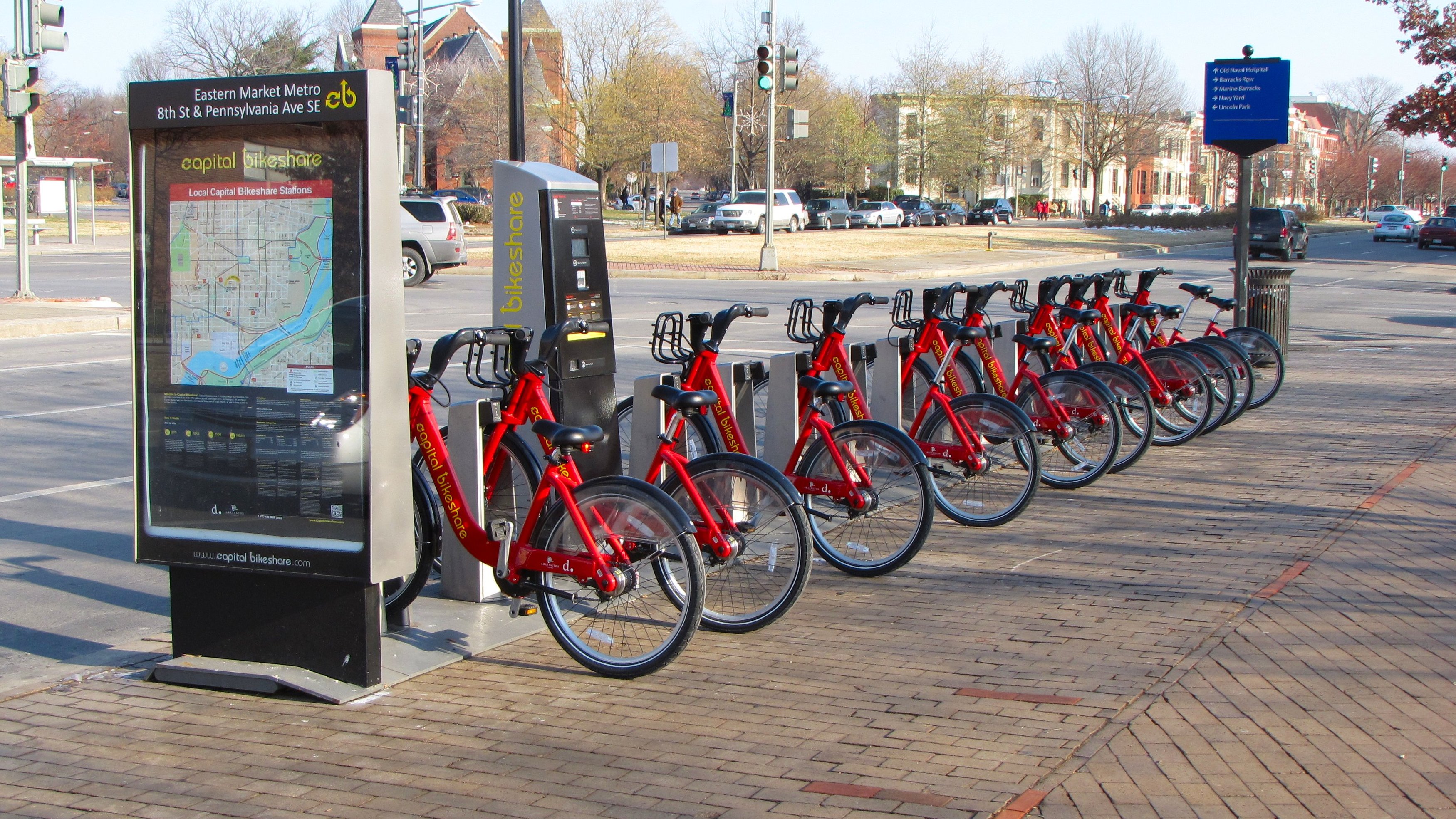
Bike share is all the rage in the United States. In the last month, both Chicago and New York City have launched bike share programs. As bike share programs reach more and more people, many are questioning whether these programs are an effective use of money. I believe they are.
Regional Fare Systems
One issue facing regions is the lack of interoperability between public transit systems. Between a city and its suburbs, a single region could have a dozen different transit agencies with a dozen different fare systems. Although one regional transit agency that meets the transit needs of everyone in the region might be ideal, this is often difficult to implement because of the diverse needs of people within a region, as well as the number of municipalities in a region. One stepping stone to getting to regional transit--or at the very least, one way to make traveling around a region easier--is for regions to adopt regional fare systems.
Obama’s down with PPP… and so are we?
![]() |
| Tunnel Boring Machine at PortMiami |
As we all know, federal funding for transportation infrastructure projects
is a thing of the past. The recession of 2008 still lingers in the federal
budget cuts and the resistance to raise user-base fees. The primary funding
source for transportation projects, the highway trust fund, has seen rapid
decline in recent years due to lower vehicle miles traveled and stagnant gas tax
rates. While there seems to be no money for transportation, there has never
been a time when transportation is so in demand. State and local governments
are struggling to keep their current systems in good condition, while also
trying to fund new and innovative transit technologies. This disconnect is
reason enough for the federal government to start taking action. This action has
taken the form of public-private partnerships (PPPs).
Op-Ed | Local | Idling Reduction: A Common Sense Plan
Old habits are hard to break. To most, idling
a car may seem fairly harmless, but in fact, there are many adverse effects.
Carbon emissions have a major impact on air quality, with implications for public
health and the environment, as we all know. One way to lessen these emissions
is to reduce needless pollution from idling. However, most drivers don’t think
twice about running their engine while the car is not in motion. For this
reason, the City of Portland and Multnomah County need to work together to
create idling regulations for passenger vehicles.
The two municipalities have worked together briefly on this
issue before, during the “Idling Gets You Nowhere” public outreach campaign in the
summer of 2011. As part of that effort, Mayor Adams’ office convened an idling
reduction task force to look into various options for addressing the
issue. Multnomah County took the lead on
outreach by creating an informational website, hanging “Idling
Gets You Nowhere” banners across the Hawthorne Bridge and mobilizing volunteers
to hand out postcards explaining the dangers of vehicular idling during bridge
lifts and at community events.
The partnership makes sense in
light of the two municipalities’ efforts to reduce carbon emissions. In 2009,
the City of Portland joined forces with Multnomah County to adopt the ClimateAction Plan, a three-year plan to put us on a path to achieve a 40 percent
reduction in carbon emissions by 2030 and an 80 percent reduction by 2050. “The
Climate Action Plan commits the City and Multnomah County to 93 actions over
the next three years and establishes 18 objectives for 2030 (City of Portland,
2009).” However, in the whole 70 page document, idling is mentioned only twice.
Op-Ed: Integrated Corridor Management, transportation agencies can all be friends!
What’s the
problem?
Didn’t get home in time to
watch Jeopardy because you were stuck in traffic? Late to your bowling league
because of a crash blocking two lanes? Missed your child being born due to
unexpected lane closures?
Free Transit For All
The benefits of increased transit use are plentiful and well-documented, from increases in health to reductions in congestion to improvements in air quality. For these reasons we should strive to increase public transportation use in our cities. Yet we continue to highly subsidize driving, making it more attractive at the expense of other modes of transportation. It is time for a radical change in our transportation priorities; cities should make public transportation free for all users. In addition to reducing driving, free public transit will increase mobility and equity throughout our society.
Op-ed: Our National Parks Need a Transportation Plan!
Our National Parks are being overrun, and the time has come
to put together a comprehensive transportation plan for the National Park
system. The problem today is that our National Park system is overused creating
major traffic problems and crowds that make it seem like that place in Southern
California. Today we need to start planning now for alternative transportation
systems in our national parks that will move people in and out of the parks
easier and with less ecological impacts. This is especially true in our more
crowded and compact members of the park system.
What comes to mind when you think of the National Parks? Do
you think of some remote spot in Yellowstone, the opportunity to awe at the
Grand Canyon, the opportunity to see some unique arch formation at Arches, or
is it the beauty that photography Ansel Adams captured in his many photos of
Yosemite National Park?
I will take the
beauty of Yellowstone any day over a trip to the artificial wonderland in
Southern California that just raised its prices again with its phony Main
Street and long lines. I think about the time on Hurricane Ridge at Olympic
National Park where we climbed a six foot tall snow bank in the middle of July,
or watched a mountain goat eat in a prairie during a snow storm in early July
in Glacier National Park.
| Map of Major National Parks provide by terragallery.com |
To make matters worse the National Parks service budget is
extremely strained as it funding is looked at as an easy target for politicians
trying to convince the voters in their home district that they are doing
something on the budget deficit. Meanwhile while some parks already have plans
in place, others are struggling under the weight of so many visitors.
Yosemite National Park is a perfect example. Situated
ideally close to San Francisco and Sacramento, Yosemite is being loved to
death. During the summer traffic in, around and out of the park can be a
nightmare. Yosemite however does have an extensive shuttle system along with
offering bus service that connects with Amtrak’s San Joaquin service, Greyhound
in Merced. However, travel is not being restricted except to certain spots in
the park (National Park Service).
A second example is Glacier National Park in Montana.
Glacier benefits from having access to one of Amtrak’s most popular trains the
Empire Builder at both ends of the park. In addition there is not only shuttle
service provided by the park but there is also the famous red touring vehicles
that run tours from many points into and out of the park. Despite all these
options the main road through Glacier “Going to the Sun Road” is still often
bumper to bumper with cars and finding parking spots can be difficult even
early in the season.
On the other hand Zion National Park in Utah took the
radical step several years ago to eliminate private automobiles form the park
during peak periods and offers an extensive shuttle service to all the major
points in the park. Despite the fears that this would cause people to avoid the
park it has turned out that people have continued to come to park and in fact
the park broke a attendance record in 2010 (Deseret News).
The Grand Canyon National Park had some of the most
ambitious plans. In the late 1990’s the park was planning to build a light rail
system that would transport passengers around the major sights in the park and
allow the park to basically ban cars from traveling into and out of the park. The
light rail trains would also connect with the Grand Canyon Railroad which
provides a tourist train between Williams, Arizona and the rim of the Grand
Canyon (Associated Press). However, the
conservative Goldwater Institute fought the plans and convinced the Arizona
State Senators to fight the plan which eventually was abandoned (Foster).
For some parks, an alternative transportation plan is not
going to be easy such as Yellowstone because of its size and distance from
major cities. However, that does not mean that a alternative transportation
plan cannot be developed and in fact should be developed. While the light rail
plan may have been killed in the Grand Canyon, the traffic problems have not
magically disappeared.
The transportation plan needs to take into account not only
how people get around the parks but how people get to the parks. What alternatives
exist for people to use instead of their alternatives? For some parks this
question is wide open because they are accessible by train, bus, bicycle, etc.
while others have limited alternative transportation access. While many parks
offer shuttles or tour buses, we need a comprehensive plan for the park service
as a whole and it should have been done years ago. The time for action to
protect our treasured National Parks is now!
References
Associated Press
(1997, November 25). Light Rail to Replace Most Cars in Grand Canyon. Sunday
Courier. Retrieved June 8, 2013, from
http://news.google.com/newspapers?nid=896&dat=19971125&id=kbQKAAAAIBAJ&sjid=gE0DAAAAIBAJ&pg=5156,3876971
Foster, D.
(n.d.). Grand Canyon Transportation Planning: The Railroading of Visitors |
Goldwater Institute . Goldwater
Institute. Where freedom wins. .
Retrieved June 10, 2013, from
http://goldwaterinstitute.org/article/grand-canyon-transportation-planning-railroading-visitors
National Park
Attendance 2008-2012. (n.d.). National Park Service. Retrieved June 8,
2013, from
https://irma.nps.gov/Stats/SSRSReports/System%20Wide%20Reports/5%20Year%20Annual%20Report%20By%20Park
White, D. D.
(2007). An Interpretive Study Of Yosemite National Park Visitors̢۪
Perspectives Toward Alternative Transportation In Yosemite Valley. Environmental
Management, 39(1), 50-62.
Yosemite
National Park - Yosemite National Park. (n.d.). U.S. National Park Service -
Experience Your America. Retrieved June 10, 2013, from
http://www.nps.gov/yose/index.htm
Zion National
Park - Zion National Park. (n.d.). U.S. National Park Service - Experience
Your America. Retrieved June 10, 2013, from
http://www.nps.gov/zion/index.htm
Zion National
Park attendance breaks record. (2010, May 10). Deseret News. Retrieved
June 9, 2013, from
http://www.deseretnews.com/article/700007187/Zion-National-Park-attendance-breaks-record.html?pg=all
The carrot and the stick(?) on Electric Vehicle Drivers
Electric vehicle users have been exempted from paying their
use of road facilities. That's because they do not need to fuel their car with
gas. The main source of transportation funding which is gas tax revenue is
declining. With the growing market of electric vehicles, fuel efficiency of
regular vehicles are improving so that the future of transportation funding is
not likely bright with current scheme of road tax.
It seems that there are two distinct directions when it
comes to a road tax on electric vehicles. As the carrot, there are tax
incentives for the purchase of electric vehicles at a state level and a federal
level[1]. Consumers who purchase a electric vehicle are eligible to apply for
federal tax credits up to $7,500 depending on battery size. Total 31 states offer various incentive
programs for the electric vehicle drivers. As the stick, a new road tax scheme
enables to impose tax on all vehicles including electric vehicles, plug-in
hybrid electric vehicles, and all regular vehicles. The vehicle mileage fee
emerged as one of the leading alternatives or supplements to fuel taxes in
recent surface transportation financing policy debates[2].
Recently, several states propose a new road tax[3]. One of
main issues is imposing tax on electric vehicle users. The state of Washington
demands people driving electric vehicles to pay a $100 annual tax. Plug-in
hybrids are excluded from the new bill which was passed last year. New
Jersey would impose all drivers 0.00839
cents per mile. Average drivers who
travels 12,000 miles per year would pay around $100 for driving any vehicles
including electric vehicles. House Bill 2313 of Virginia charges larger annual
registration fees and an additional $64 per year for environment friendly
vehicles including electric vehicles, hybrids and alt-fuel vehicles. Oregon is considering
a bill in which plug-in and highly fuel efficient vehicles are paying tax by
mile driven[4]. The vehicle drivers need to pay a cent and a half per mile
which would be $230 for 15,000 miles per
year.
Some people questioned on this movement targeted on electric
vehicle drivers[3]. They warned that the new tax on electric vehicles would
prevent the change of vehicle from regular vehicles to electric vehicles.
Further, higher tax on electric vehicles would be reverse discrimination. In
New Jersey's bill, electric vehicle drivers would pay $100 for 12,000 miles,
but gasoline vehicle drivers would pay $69.60 with a case that the average
speed is 25 miles per gallon[4].
Does a road tax go to a right direction? Before judging it,
it seems to be reasonable to find any researches to back-up or understand
current policies around electric vehicles. First, regular drivers pay for road
maintenance, construction, and other service fees including tolls, but not for
full transportation cost[5]. Zhang and Lu(2012) attempted to calculate the
marginal-cost vehicle mileage fee by incorporating the cost of externalities
into a full transportation cost[2]. Four types of externalities were included
such as pollutant gas emissions, GHG emissions, congestion, and external infrastructure
cost. The obtained marginal-cost vehicle
mileage fee was from 7.7 to 9.1 cents/mi depending on vehicle size and type.
Compared to 1.2 cents per mile for a current gas tax, it was quite high. Secondly, there was a research calculating
savings from the use of electric vehicles. Lidicker et al.(2010) presented that
the savings by shifting from a conventional 23 mpg vehicle to a 300 Wh/mi
electric vehicle range from $100 to 1,800 for 10,000 miles driven per year[6].
These two research showed that current road tax was quite
small theoretically, and proposed vehicle mileage fee seemed to be still far
below than full transportation cost. However, for the case of New Jersey, the
public acceptance of a new road tax on electric vehicles would be harsh. Nobody
likes to increased service fee. Even it is more expensive than one for regular
vehicles! Practical approaches should be mingled with theoretical one. What New
Jersey missed is a promoting period.
Customers of electric vehicles seems to be early adapters in
a sense that electric vehicle is still quite a new technology and the price of
it is more expensive than regular vehicles. One of characteristics of early
adapters would be dealing with premium cost of a product. To promote a switch
from a regular vehicle to a electric vehicle as a main trend, current
incentives on the purchase of electric vehicles would be effective. Let's see
how it works. The reduction of personal purchasing cost by monetary incentives would
trigger the increase of demand. It would result in the increase in revenue of
electric vehicle manufactures. More manufactures would be interested in launching
more product lines to maximize profits. The more electric vehicle lines are
linked with accommodating utility of customers so that it would positively
affect on demand increase. Eventually,
monetary incentives on the purchasing electric vehicles help electric vehicles
to be more popular than now.
Going back to New Jersey case, it gets more complicated for
a road tax on electric vehicles to come up with compensating the loss of a
current gas tax with a new distance based user charge. It make sense to share transportation
cost with not only for regular vehicle drivers
but also electric vehicle drivers.
With considering a promoting period of electric vehicles for public, it
might be better to impose a same or less
distance based user fee for electric vehicle compared to one for regular
vehicles. However, eventually, the road tax needs to be increased. Through gradual increase in a road tax, the
deficit of transportation funds need to be recovered. The gradual increase would be mutually
beneficial for reducing the deficit of transportation funds and suppressing vehicle
mile travels.
(References)
[1] Federal
and State Tax Incentives on EV
http://www.pluginamerica.org/incentives
[2] Zhang, L. and Lu Y. Marginal-Cost Vehicle Mileage Fee. In
Transportation Research Record: Journal
of the Transportation Research Board, No. 2297, Transportation Research
Board of the National Academies, Washington, D.C., 2012, pp. 1-10.
[3] Damon
Lavrinc. New Taxes Make Electric Vehicle Owners Pay Their Share
http://www.cnn.com/2013/05/09/tech/innovation/electric-vehicle-taxes/
[4] Jon
LeSage, New Jersey Considering Electric Vehicle Tax
http://green.autoblog.com/2013/05/04/new-jersey-considering-electric-vehicle-tax/
[5] Black,
Chapter 9: The Full Cost of Transportation.
Op-Ed: Oregon Needs Mobility Education
Oregon’s graduated licensing program has received much
praise in its effectiveness at reducing crash rates for teen drivers. Given
this success, I propose that the state continue to lead the nation in driver
preparedness by instituting mobility education, starting at the elementary
school level. This recommendation focuses on the state level because the Oregon
Department of Transportation already handles driver education within the state.
Furthermore, instituting this novel idea as a pilot program within the state
will allow for gradual adoption and flexibility in implementation.
Sunday, June 9, 2013
The Price is Right: Federal Ecological Incentive for Long-Distance Travel
Walking on the
Amtrak platform with my rolling luggage, I can’t keep myself from smiling. I
love trains, for ecological and recreational reasons, and the fact that my
partner and I are currently replacing round-trip cross-country flights with
train trips makes me love them even more. And seeing a large majority of seats
full gives me hope that one day train travel will become a viable travel option
again for the American population.
Op-Ed: Denver: Make transit-oriented living possible for everyone
The Denver region has an unprecedented opportunity to lead
the country in shaping a more sustainable, livable and affordable metropolis. The
public elected to invest over $6 billion into one of the largest rapid transit
systems in the country, including 122 miles of light rail and 18 miles of bus
rapid transit (1). The return on this investment will be measured not just by
how many riders the system attracts, but by the social and economic backgrounds
of those riders. Public transit cannot become luxury good only available to
those who can afford to live near it. We need to demand smart and aggressive
public policy to ensure housing around transit stations remains affordable to a
wide range of people. Otherwise, we will continue to compound the inequities
that stifle the social mobility of so many of our citizens.
Subscribe to:
Posts (Atom)